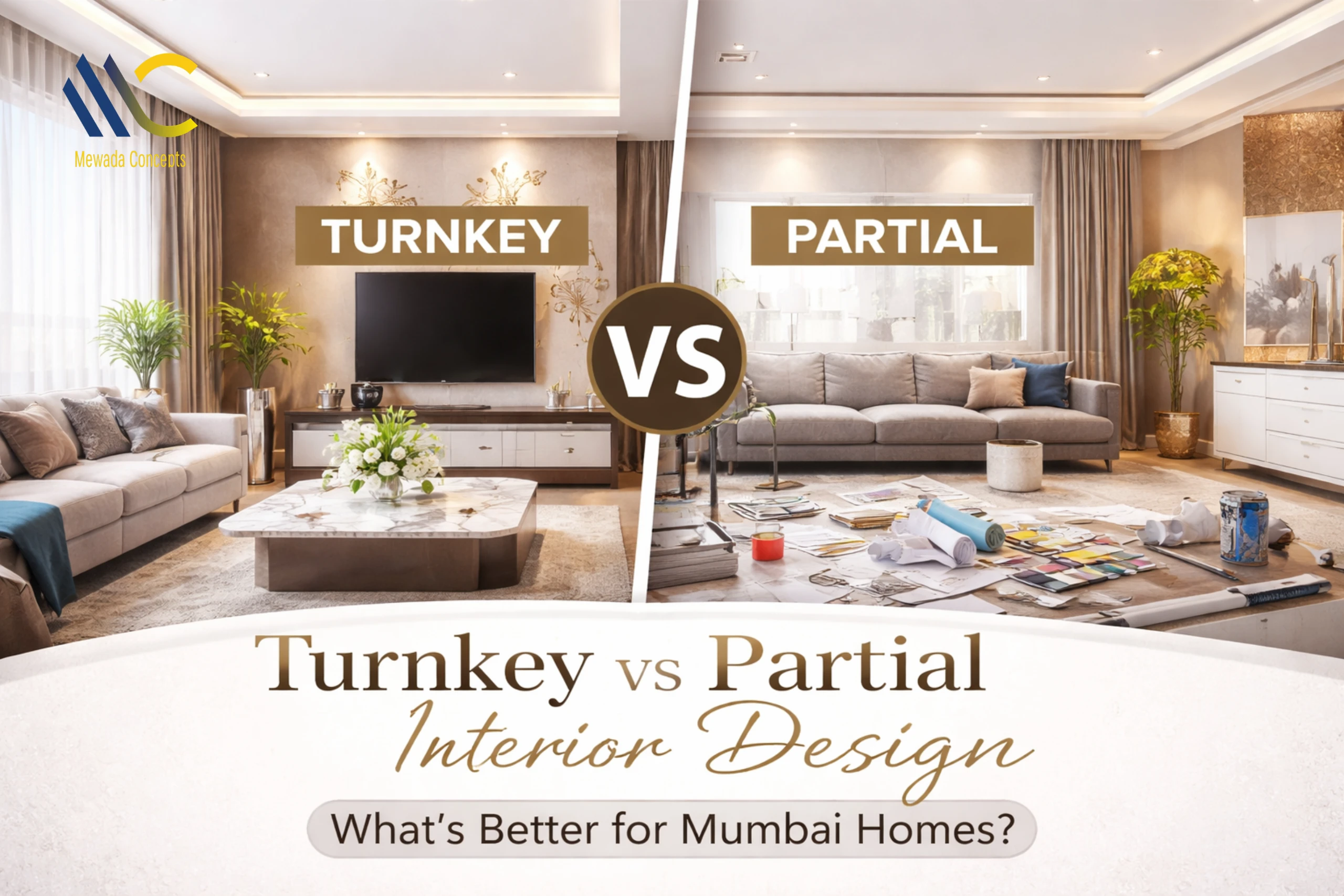
Planning interiors for a home in Mumbai involves more than just choosing colours, furniture, or décor themes. It requires a clear understanding of execution methods, project involvement, and long-term usability. Many homeowners today begin their research by searching for Top interior designers in Andheri, mainly because they want clarity on whether turnkey or partial interior design is the better option for their home.
Before exploring the differences, it is important first to understand why this decision matters and when each option becomes relevant. The execution model you choose can significantly influence your project experience, timeline, and overall design satisfaction.
Why is choosing the right interior execution model important?
Selecting the right approach ensures that the design vision is executed efficiently and without unnecessary stress. It helps maintain consistency in materials, planning, and final aesthetics while also reducing coordination challenges.
Some key reasons this decision plays a crucial role include:
1.It determines how smoothly the project will progress
2. It defines the level of homeowner involvement required
3. It affects design consistency and functional efficiency
4. It impacts long-term maintenance and usability.
When should you consider turnkey or partial interiors?
Different life situations call for different design approaches. Turnkey interiors are often preferred when homeowners want a seamless, professionally managed process. Partial interiors are more suitable when flexibility and phased execution are priorities.
Situations where each approach works best include:
1.Turnkey interiors are ideal for new home possession or full-home renovation
2.Partial interiors suit room-wise upgrades or gradual design planning
3.Turnkey works well for busy professionals or families with limited time
4.Partial interiors are practical for homeowners who prefer hands-on involvement.
Understanding these factors early helps avoid confusion later and ensures better planning decisions.
Understanding Turnkey Interior Design
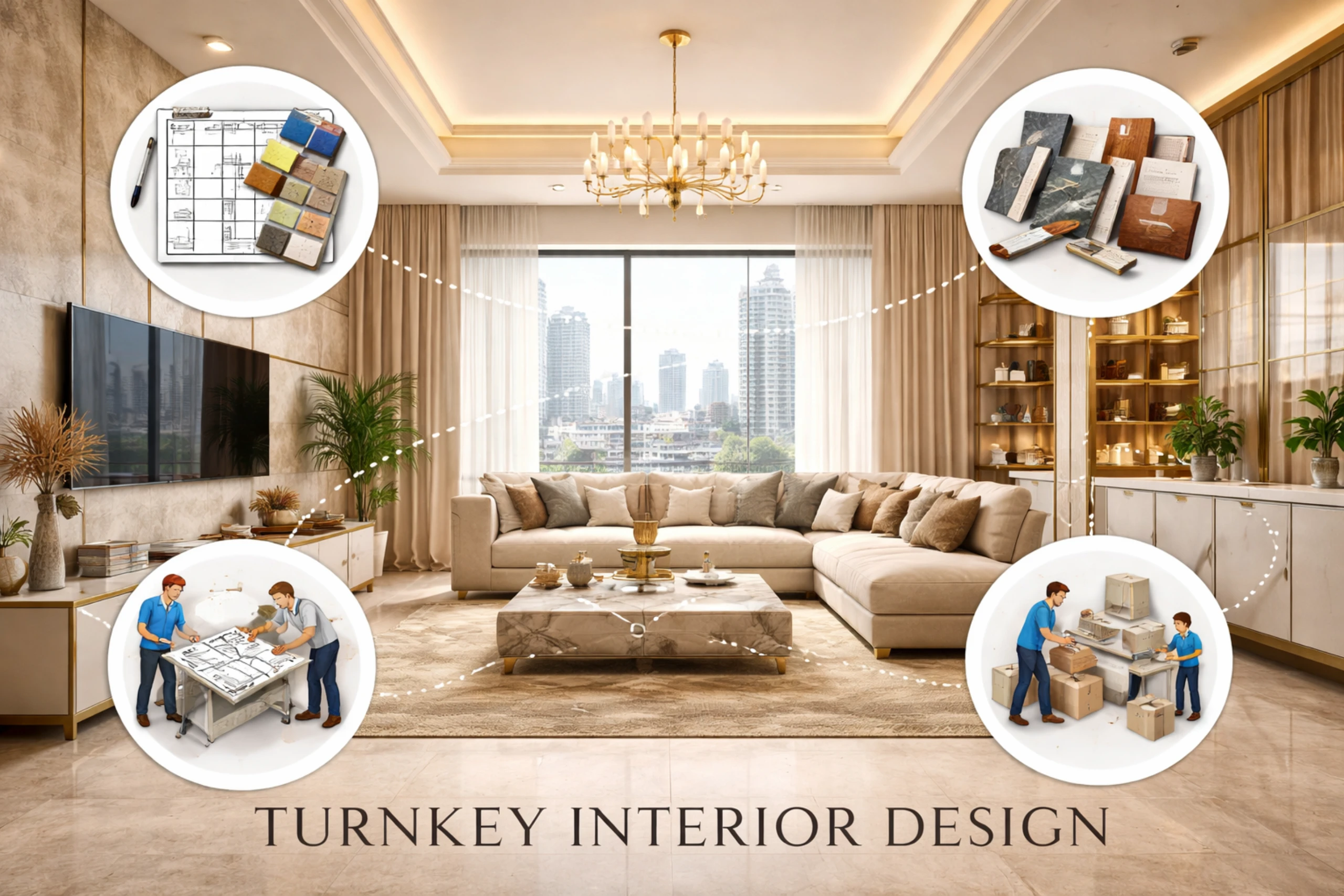
Turnkey interior design is a comprehensive service in which the design firm manages the project from initial concept development through final execution and handover. In a city like Mumbai, where time constraints and logistical challenges are common, this approach provides a structured and organized design journey.
In turnkey projects, homeowners typically collaborate with the designer during the planning phase to finalize layouts, themes, and materials. Once execution begins, the design team handles coordination with contractors, vendors, and suppliers. This centralized responsibility ensures that the design intent is implemented consistently.
Turnkey interiors are particularly beneficial for homeowners who want a cohesive design outcome without managing the day-to-day complexities of execution. The structured workflow also helps maintain a more predictable timeline and stronger quality control.
Understanding Partial Interior Design
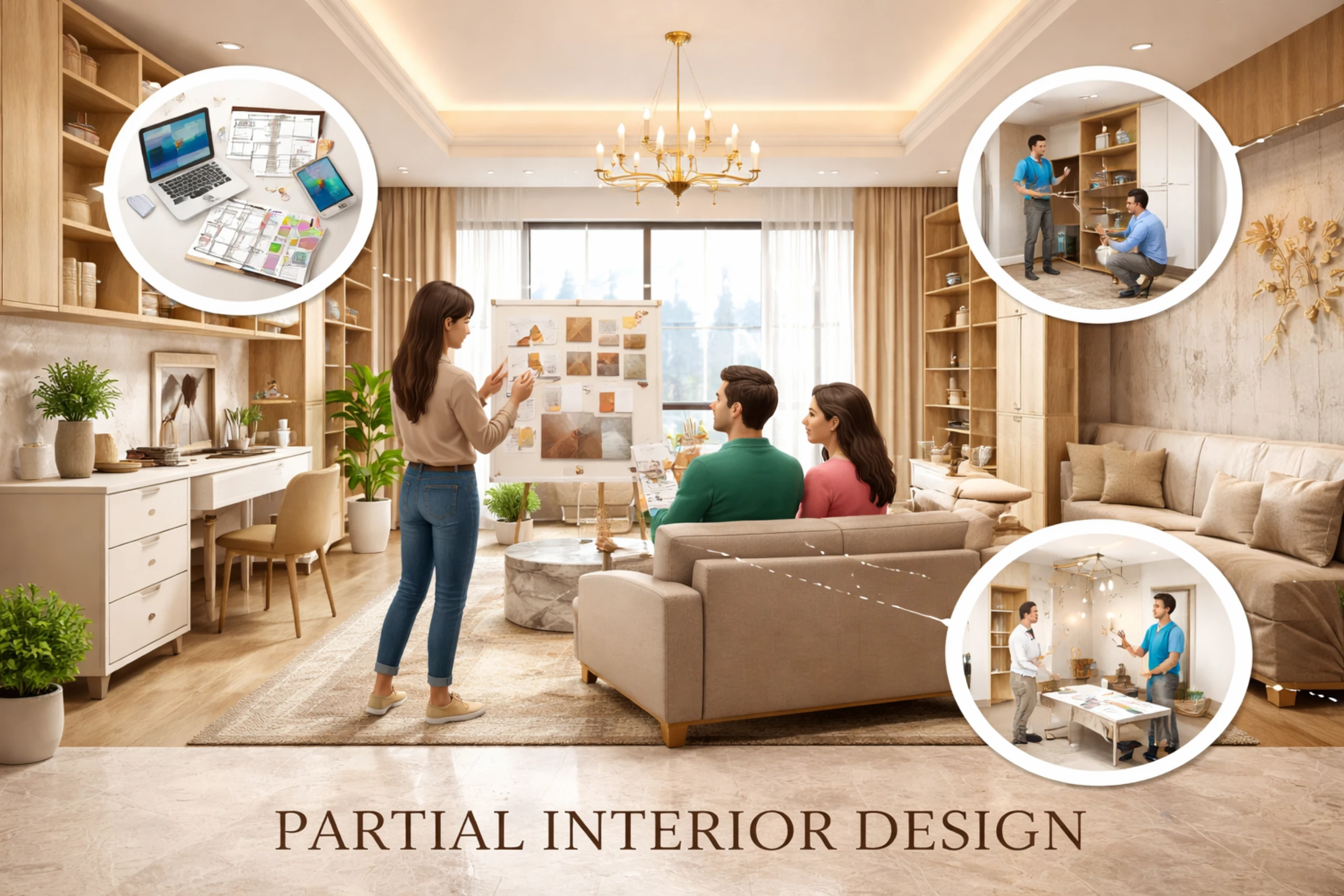
Partial interior design involves engaging a designer for specific aspects of the project rather than the entire home. This could include conceptual planning, furniture design, or styling guidance for selected spaces.
Many homeowners consulting a Residential interior designer in Andheri choose partial services when they prefer gradual upgrades or already have trusted contractors to execute. This approach allows greater flexibility in decision-making and budget allocation.
However, partial interiors require the homeowner’s active involvement. Coordinating with multiple vendors, ensuring quality consistency, and managing project timelines become shared responsibilities.
Despite these challenges, partial interiors can be effective for renovation projects, rental property improvements, or situations where only certain areas require professional design input.
Key Differences in Execution and Experience
The primary difference between turnkey and partial interiors lies in how responsibility is distributed. Turnkey projects centralize project management, while partial interiors involve collaborative coordination between the designer and homeowner.
Turnkey interiors often result in more cohesive visual outcomes because all elements are planned and executed under a unified design strategy. Partial interiors, on the other hand, allow flexibility but may require careful planning to maintain design harmony.
Another significant factor is project workflow. Turnkey execution tends to follow a structured schedule, whereas partial projects may experience variations depending on vendor availability and coordination efficiency.
Mumbai’s Urban Living and Interior Planning Needs
Unique urban challenges influence interior design decisions in Mumbai. Compact apartment layouts demand intelligent space utilization and multifunctional design solutions. Storage optimization becomes essential due to limited carpet areas.
Environmental conditions such as humidity also affect material selection and durability. Society regulations and restricted working hours further complicate project execution. These factors make it beneficial to collaborate with an experienced Interior Designer in Andheri who understands local residential dynamics.
Professionally planned interiors not only improve aesthetics but also enhance daily functionality and long-term comfort.
When Turnkey Interiors Offers Greater Value
Turnkey interiors are often the preferred choice when homeowners seek convenience and design consistency. This approach minimizes execution stress and ensures the outcome closely aligns with the initial design vision.
It is especially suitable for homeowners moving into newly purchased properties or those undertaking full-scale renovations. Since the entire process is professionally managed, the chances of coordination delays and quality inconsistencies are reduced.
Turnkey interiors also help maintain design cohesion across rooms, creating a balanced, harmonious living environment.
Situations Where Partial Interiors Can Be Advantageous
Partial interiors work well when homeowners prefer phased investment or want to experiment with design concepts gradually. This approach allows customization flexibility and greater control over vendor selection.
It is particularly practical for renovation projects where only certain areas require transformation. However, successful partial interior execution depends on effective communication and project management skills from the homeowner’s side.
When managed properly, partial interiors can achieve satisfying results while maintaining budget flexibility.
Interior Design Trends Influencing Modern Decisions
Contemporary Mumbai homes are increasingly embracing minimalistic aesthetics and functional design elements. Open layouts, modular furniture, and neutral colour palettes are becoming popular choices.
Smart lighting systems and multifunctional storage solutions are also shaping modern interior planning. These trends require seamless integration between design planning and execution strategy, which influences the choice between turnkey and partial interiors.
Professionally guided interiors help ensure that these trends are implemented in a way that enhances both visual appeal and practical usability.
Final Thoughts
Choosing between turnkey and partial interior design is ultimately a strategic decision based on lifestyle preferences, project scale, and desired involvement level. While turnkey interiors provide convenience and streamlined execution, partial interiors offer flexibility and phased customization opportunities.
For many Mumbai homeowners, the decision is influenced by time availability, project urgency, and long-term living goals. By evaluating these factors carefully and collaborating with experienced professionals, it becomes possible to achieve interiors that balance design excellence with everyday functionality.
FAQ's
The main difference lies in project responsibility. In turnkey interior design, the designer handles everything from planning to execution and final handover. In partial interior design, the designer provides limited services while execution and coordination are managed by the homeowner.
Turnkey interiors are generally more suitable for small Mumbai homes because they ensure better space planning, coordinated execution, and efficient storage solutions. Many homeowners prefer working with an experienced Interior Designer in Andheri to achieve practical layouts and optimized functionality in compact apartments. However, partial interiors can work well for phased renovations or specific room upgrades.
Turnkey interiors may seem costlier initially because they include complete project management and execution. Partial interiors may appear budget-friendly at first, but costs can vary depending on vendor coordination and material choices.
The right choice depends on your budget, time availability, involvement preference, and project scope. Evaluating these factors carefully helps in selecting the most suitable interior design approach.