
When planning a home or office interior project, one term you’ll often come across is “turnkey interior design.” While it sounds straightforward, many homeowners are unsure about what it actually includes, whether it’s worth the investment, and how it differs from hiring multiple contractors separately.
At Mewada Concepts, we’ve spent over 16 years helping Mumbai homeowners and businesses transform spaces through professionally managed interior design projects. One thing we’ve consistently observed is that many people underestimate the complexity of coordinating designers, contractors, suppliers, carpenters, electricians, and other specialists.
This is exactly where turnkey interior design solutions make a difference.
In this guide, we’ll explain what turnkey interior design really means, what is typically included, the benefits, common misconceptions, and whether it’s the right choice for your project.
What Does Turnkey Interior Design Really Mean?
A turnkey interior design solution is an end-to-end service where a single company handles the entire interior project from concept development to final handover.
Instead of managing multiple vendors independently, homeowners work with one team that oversees every stage of the project, including design, procurement, execution, quality control, and project management.
The term “turnkey” essentially means that the space is delivered ready for use. The client can simply “turn the key” and move into a completed environment.
Rather than coordinating different contractors for civil work, electrical installations, furniture manufacturing, painting, and site supervision, the responsibility lies with one dedicated interior design company.
Why Has Turnkey Interior Design Become So Popular?
Modern homeowners are busier than ever.
Managing an interior project requires significant time, planning, and coordination. Delays from one contractor can affect multiple stages of the project, leading to frustration, budget overruns, and extended completion timelines.
As a result, many homeowners now prefer turnkey solutions because they offer:
- Single-point accountability
- Better project coordination
- Simplified communication
- Improved timeline management
- Consistent quality standards
- Reduced stress throughout the project
For professionals, families, and even NRI homeowners managing projects remotely, turnkey interiors provide a more streamlined experience.
What Is Typically Included in a Turnkey Interior Design Project?
While the exact scope may vary between companies, a comprehensive turnkey interior package often includes:
Interior Design & Planning
- Space planning
- Layout development
- Concept creation
- 3D visualizations
- Material recommendations
- Design consultations
Civil & Structural Work
- Minor demolition work
- Wall modifications
- Flooring upgrades
- Surface preparation
Electrical & Plumbing Work
- Wiring modifications
- Lighting installation
- Switch and socket placement
- Plumbing adjustments
- Bathroom utility installations
Ceiling & Finishing Work
- False ceilings
- Wall finishes
- Painting
- Decorative elements
Modular & Custom Furniture
- Modular kitchens
- Wardrobes
- TV units
- Storage solutions
- Custom furniture pieces
Procurement & Installation
- Material sourcing
- Vendor coordination
- Product procurement
- Installation management
Project Management
- Timeline planning
- Site supervision
- Progress monitoring
- Quality inspections
- Final handover
Before signing any agreement, homeowners should always request a detailed scope document to understand exactly what is included and excluded.
Turnkey Interiors vs Traditional Interior Design: What's the Difference?
Many homeowners assume all interior design projects work the same way. However, turnkey projects and traditional design projects differ significantly.
|
Factor |
Turnkey Interior Design |
Traditional Approach |
|
Project Management |
Handled by one company |
Managed by homeowner |
|
Communication |
Single point of contact |
Multiple vendors |
|
Accountability |
Clearly defined |
Shared across contractors |
|
Timeline Control |
Better coordination |
Greater risk of delays |
|
Quality Monitoring |
Centralized |
Varies by contractor |
|
Stress for Homeowner |
Lower |
Higher |
|
Procurement Management |
Included |
Homeowner often involved |
For homeowners seeking convenience and predictability, turnkey execution often provides a more efficient experience.
Common Myths About Turnkey Interior Design
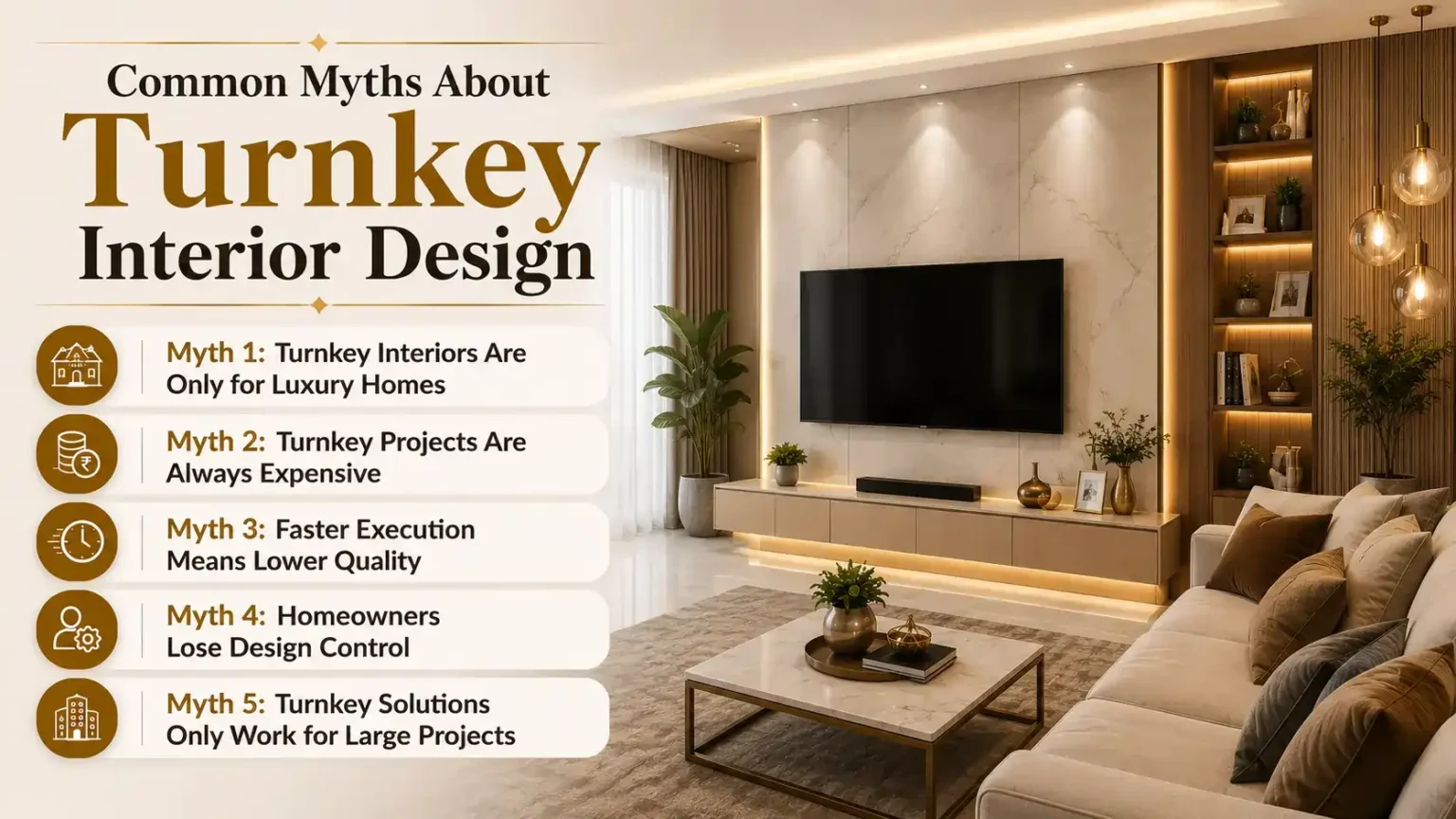
Myth 1: Turnkey Interiors Are Only for Luxury Homes
This is one of the most common misconceptions.
While luxury residences frequently use turnkey services, many apartment owners and mid-range homeowners also choose turnkey solutions because they simplify project management and reduce coordination challenges.
Myth 2: Turnkey Projects Are Always Expensive
Many people focus solely on the initial quotation.
However, managing multiple vendors independently can lead to hidden costs, delays, material wastage, and rework. A professionally managed turnkey project often helps maintain better budget control.
Myth 3: Faster Execution Means Lower Quality
Speed and quality are not mutually exclusive.
When experienced teams follow structured workflows, quality checkpoints, and proper planning, projects can be completed efficiently without compromising workmanship.
Myth 4: Homeowners Lose Design Control
A good turnkey interior company collaborates closely with clients throughout the design process.
The homeowner remains involved in design approvals, material selections, layouts, and key decisions.
Myth 5: Turnkey Solutions Only Work for Large Projects
Turnkey execution can be beneficial for projects of various sizes, from compact apartments to large residential and commercial spaces.
The Biggest Challenges Homeowners Face Without Turnkey Solutions
Homeowners who manage multiple contractors often encounter:
Communication Gaps
Different vendors may blame one another when issues arise, making problem resolution difficult.
Timeline Delays
One delayed contractor can impact several subsequent stages of the project.
Budget Overruns
Poor coordination can lead to unexpected expenses and duplicate costs.
Quality Inconsistencies
Different teams may follow different standards, affecting the overall finish.
Increased Stress
Managing procurement, labor, scheduling, and site visits requires substantial time and effort.
These challenges are often the primary reason homeowners switch to turnkey interior solutions.
Who Should Choose Turnkey Interior Design?
Turnkey interiors are particularly suitable for:
Busy Professionals
Those with limited time to manage day-to-day project activities.
First-Time Homeowners
People unfamiliar with construction and interior execution processes.
Families Moving Into New Homes
Those seeking a faster and more organized project completion process.
NRI Homeowners
Individuals managing projects remotely and requiring regular updates and centralized oversight.
Homeowners Seeking Predictable Outcomes
Anyone prioritizing accountability, transparency, and professional project management.
When Turnkey Interior Design May Not Be the Best Choice
Although turnkey solutions offer significant advantages, they may not suit every situation.
You may consider alternatives if:
- You prefer personally managing every contractor.
- The project scope is extremely limited.
- You already have trusted vendors and suppliers.
- You enjoy hands-on involvement throughout execution.
A professional interior design company should honestly help clients determine which approach best suits their goals.
Red Flags to Watch Out for When Choosing a Turnkey Interior Company
Before selecting a turnkey interior partner, watch for these warning signs:
Extremely Low Quotations
If a quote seems significantly lower than competitors, important elements may be excluded.
Lack of Detailed Scope
Always insist on clear documentation regarding deliverables.
No Dedicated Project Manager
Projects often suffer when accountability is unclear.
Unclear Timelines
Reliable companies provide structured schedules and milestone-based planning.
Poor Material Transparency
Material specifications should be documented and approved.
No Quality Control Process
Quality checkpoints help ensure consistency throughout execution.
Limited Communication
Regular progress updates are essential for project transparency.
How Mewada Concepts Approaches Turnkey Interior Design
At Mewada Concepts, our approach focuses on delivering a seamless experience through end-to-end project execution.
With over 16 years of industry experience and more than 75 completed projects across Mumbai, we understand the importance of combining design creativity with disciplined project management.
Our turnkey process emphasizes:
- Comprehensive design planning
- Dedicated project management
- In-house execution capabilities
- Material selection guidance
- Transparent communication
- Structured quality checkpoints
- Timely project delivery
- Premium-quality workmanship
By managing every stage under one roof, we help homeowners and businesses enjoy a smoother and more predictable interior design journey.
Final Thoughts
Turnkey interior design is much more than a convenience service.
It is a project delivery model designed to simplify execution, improve accountability, and create a better overall experience for homeowners and businesses alike.
Whether you’re renovating an apartment, designing a new home, or upgrading a commercial space, a professionally managed turnkey solution can help reduce stress, streamline communication, and ensure your vision is executed efficiently.
The key is choosing an experienced interior design partner with a proven process, transparent communication, and a strong commitment to quality.
For homeowners seeking a hassle-free interior transformation, turnkey interior design continues to be one of the most practical and effective approaches available today.
Frequently Asked Questions
Turnkey interior design is an end-to-end service where a single company manages design, procurement, execution, supervision, and final project delivery.
Not necessarily. While upfront costs may appear higher, turnkey solutions often help reduce hidden expenses caused by delays, coordination issues, and rework.
Most packages include design planning, civil work, electrical work, plumbing, painting, furniture, modular solutions, project management, and final installation.
The timeline depends on project size, complexity, customization requirements, and material availability.
No. Turnkey solutions are widely used across budget, mid-range, premium, and luxury residential projects.
In turnkey projects, one company manages the entire process. Traditional projects often require homeowners to coordinate multiple vendors independently.
Yes. Turnkey solutions are commonly used for apartments because they simplify execution and improve project coordination.
Homeowners often choose turnkey interiors because they offer convenience, accountability, streamlined communication, and better control over timelines and quality.